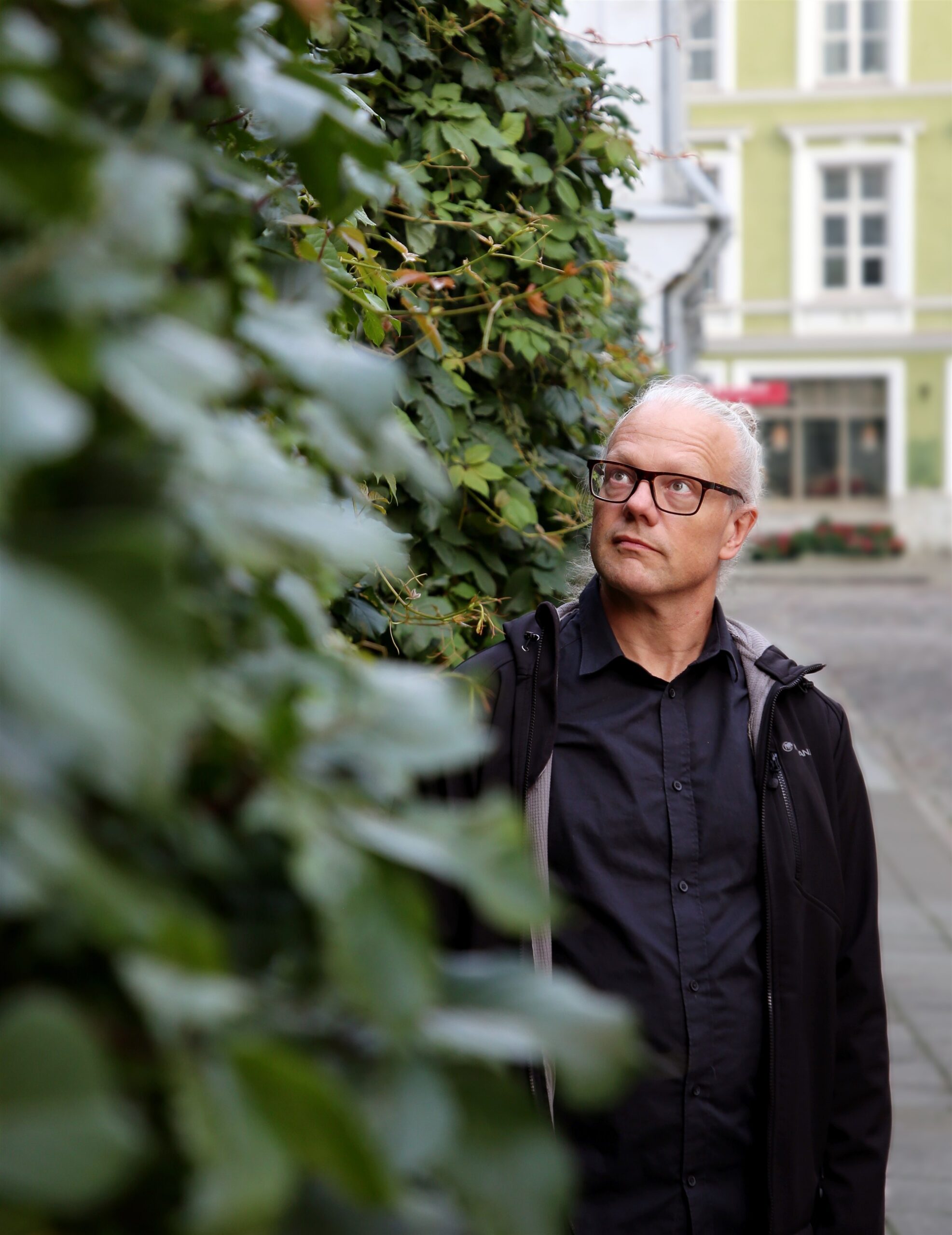
Margus Ott (b. 1975) is an Estonian philosopher and translator. He has brought into Estonian both Western and Eastern philosophical traditions, among them the works of Henri Bergson, Baruch Spinoza’s Ethics translated from Latin, and the writings of the Daoist thinker Zhuāngzi translated from Chinese. A central concept in his philosophical interpretation is “force” (vägi): his first authored book Force. Writings on Force I (Vägi. Väekirjad I, Tallinn University Press) offers an engaging and wide-ranging account of the manifestations of force in nature, society and the individual, and received the Estonian Cultural Endowment’s essay award. The series known as the “Writings on Force” comprises six volumes in total, followed by Philosophical Essays. Writings on Force II (2015), Traditional Essays. Writings on Force III (2016), Political Essays. Writings on Force IV (2017), Individual Essays. Writings on Force V and Variegated Force. Writings on Force VI (both 2018). Last year saw the publication of his extensive essay Well-being (Heaolu), in which Ott offers an original perspective on a widely used contemporary concept, arguing that existence itself is already good and that it is always possible for human beings to improve it. This recalls a notion circulating in modern cosmology that being born as a human is a rarer stroke of luck than winning the lottery.
Margus Ott